Pilita Corrales

March 28, 2008

pilita-11.jpgpilita-14.jpg

Pilita is regarded as the greatest singer of the Philippines. As a teenager, she played the guitar and sang on a radio show called La Taverna. The premature death of her father forced her to help her impoverished family by singing. She began her recording career after arriving with a shipwrecked (literally, requiring the rescue by Aussie Navy) troupe of performers in Melbourne, Australia. During her short three-year sting in Melbourne, she recorded “Come closer to me” (1958) which made her the first woman to reach the Australian pop charts with a local recording! This remarkable feat prompted the mayor of Melbourne to offer her permanent residency and to name a street after her. Pilita was almost immediately recruited to join a group of Filipino performers in the Philippines Festival show which ran for six months in Las Vegas. This engagement launched Pilita into a long enduring relationship with the Filipino communities overseas who loved her sentimental songs about home. In 1963, Pilita returned to the Philippines and hosted “An Evening with Pilita” on ABS-CBN. The popular TV show is widely regarded as one of the benchmarks in Philippines broadcasting history; it ran for 11 years until martial law closed down all privately-owned broadcast networks in the country in 1972. During that same year, Pilita was persuaded to enter the contest at the 1st Tokyo Music Festival. She sang “A million thanks to you” from her popular TV show. Pilita won the Best Performer Award, having bested numerous international artists including the popular Olivia-Newton John. She also earned herself the distinction of being the first Filipino to win in an international music festival. The Japanese Press dubbed her “Asia’s Queen of Songs”. In the early 1980s, she was a guest performer with Sammy Davis, Jr. for three weeks at Caesar’s Palace in Las Vegas. She was the first Filipino to sing at Caesar’s Palace. Trivia: She was also the only Filipina singer who performed at the Beatles’ concert at the Rizal Memorial Football Stadium on July 4, 1966.

Pilita has recorded four gold records: “Kapantay ay Langit,” “Pipit,” “Sampaguita Movie Songs,” and “Philippine Love Songs” (Vol. 1 & 2). She also dabbled in movies. The first was “Miss Wawaw’ (1968) to be followed by eleven others, most of them musicals produced by Sampaguita Pictures and Leas Productions.

Pilita received a Merit Award from FAMAS (1990), the Philippine Association of the Record Industry Lifetime Achievement Award (1991) and Philippine Citizen’s Award for TV as Best Female Performer (1965).

(MATUD NILA)
Matud nila ako dili angay
Nga magmanggad sa imong gugma
Matud nila ikaw dili malipay
Kai wa akoy bahanding nga kanimo igasa
Gugmang putli mao day pasalig
Maoy bahanding labaw sa bulawan
Matud nila kaanugan lamang
Sa imong gugma ug parayeg
Dili maluba kining pagbati
Bisan sa unsa nga katarungan
Kay unsa pay bili ning kinabuhi
Kon sa gugma mo hinikawan
Ingna ko nga dili ka motuo
Sa mga pagtamay kong naangkon
Ingna no nga dili mo kawangon
Damgo ko’g pasalig sa gugma mo

(DAHIL SA YO)
Sa buhay ko’y labis
Ang hirap at pasakit
Ng pusong umiibig
Mandi’y wala ng langit
At ng lumigaya
Hinango mo sa dusa
Tanging ikaw, sinta
Ang aking pag-asa
Dahil sa `yo nais kong mabuhay
Dahil sa `yo hanggang mamatay
Dapat mong tanungin
Wala ng ibang giliw
Puso ko’y tanungin
Ikaw at ikaw rin
Dahil sa `yo ako’y lumigaya
Pagmamahal ay alayan ka
Kung tunay man ako
Ay alipinin mo
Ang lahat sa buhay ko’y
Dahil sa `yo
Dahil sa `yo nais kong mabuhay
Dahil sa `yo hanggang mamatay
Dapat mong tanungin
Wala ng ibang giliw
Puso ko’y tanungin
Ikaw at ikaw rin
Dahil sa `yo ako’y lumigaya
Pagmamahal ay alayan ka
Kung tunay man ako
Ay alipinin mo
Ang lahat sa buhay ko’y
Dahil sa `yo


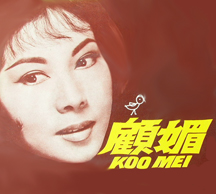
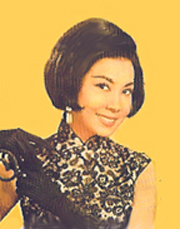
Koo Mei (Carrie Koo) 顧媚

March 24, 2008

koo-mei-102.jpgkoo-mei-12.jpg

Remembering Koo Mei who dubbed the singing voice for the famous Lin Dai 林黛 in “Endless Love” (不了情 Bu Liao Qing) in the blockbuster movie with the same title. Koo Mei is known as “Little lark” 小雲雀, a title made popular in the 1965 Shaw Brothers movie with the same name and in which she was a lead actress. She acted in several movies and sang many of the famous original movie hit songs like Mountain Song 山歌, Dream 夢, and The Girls of Ali-San 阿里山的姑娘 . She is also now a popular Chinese landscape painter in the tradition of her famous artistic family. Koo Mei has written an autobiography: 從破曉到黃昏--顧媚回憶錄.

(不了情 ENDLESS LOVE)
忘不了, 忘不了
Wang bu liao wang bu liao
忘不了你的錯
Wang bu liao ni di cuo
忘不了你的好
Wang bu liao ni di hao
忘不了雨中的散步
Wang bu liao yu zhong di san bu
也忘不了那風裡的擁抱
Ye wang bu liao na feng li di yong bao
忘不了,忘不了
Wang bu liao wang bu liao
忘不了你的淚
Wang bu liao ni di lei
忘不了你的笑
Wang bu liao ni di xiao
忘不了葉落的惆悵
Wang bu liao ye luo di chou chang
也忘不了那花開的煩惱
Ye wang bu liao na hua kai di fan nao
寂寞的長巷, 而今斜月清照
Ji mo di chang xiang er jin xie yue qing zhao
冷落的鞦韆, 而今迎風輕搖
Leng luo di qiu qian er jin ying feng qing yao
它重複你的叮嚀
Ta chong fu ni di ding ning
一聲聲忘了,忘了
Yi sheng sheng wang liao wang liao
它低訴我的衷曲
Ta di su wo di zhong qu
一聲聲難了,難了
yi shen shen nan lel, nan lel
忘不了,忘不了
Wang bu liao wang bu liao
忘不了春已盡
Wang bu liao chun yi jin
忘不了花已老
Wang bu liao hua yi lao
忘不了離別的滋味
Wang bu liao li bie di zi wei
也忘不了那相思的苦惱
Ye wang bu liao na xiang si ku nao


Kyo Sakamoto 坂本九

March 24, 2008

db_sakamoto11.jpg

Kyu Sakamoto has the distinction of being the only Japanese artist to ever scored a top international hit. His song Ue o muite arukō 上を向いて歩こう (”I Look Up When I Walk”; Sukiyaki in the West), sung completely in Japanese and against all odds, reached #1 in the US Billboard charts in 1963. The music was written by Hachidai Nakamura. It is said that Rokusuke Ei wrote the touching lyrics after his heart was broken by actress Meiko Nakamura. The lyrics tell the story of a man who looks up while he is walking so his tears would not fall. It is interesting to note that Sukiyaki is not even mentioned in the song ; the West just needed something that was easily pronounceable and associated with Japan.

In later years, Kyu Sakamoto dedicated his life for the caring of the elderly and the young and handicapped people in Japan. His other best known and most beloved song is Ashita ga Aru Sa 明日があるさ (“There’s Always Tomorrow”), which was the leading theme of the 1964 Handicap Olympics in Tokyo.

EMI (UK), 2005: Kyu Sakamoto Memorial Best
Miagete Goran Yoru no hosi wo; Sukiyaki; Ashita Ga Arusa; Kanashiki 60sai; Good Timing; Kyu-Chan Zuntatta; Kyu-Chan Ondo; Boku No Hoshi (My Star); Hitoribocchi No Futari (The Lonesome Two); Tokyo Gorin Ondo; Shiawasenara Tewotatako; Sayuonara Tokyo; Yoakeno Uta; Tomodachi; Namidakun Sayuonara; Lets Kiss (Jenka); Sekaino Kunikara Konnichiwa; Otonano Douwa Imadakara Iukeredo; Kokorono Hitomi; China Night.

Capitol Records, 1963: Sukiyaki and Other Japanese Hits
Ue o muite arukō (Sukiyaki); Tsun Tsun Bushi (The Tsun Tsun Song); Hitoribocchi No Futari (The Lonesome Two); Kyu-chan Ondo (The Kyu-Chan Folk March Song); Mo Hitori No Boku (It’s Just Not the Real Me); Good Timing; Boku No Hoshi (My Star); Kiminanka Kiminanka (I Couldn’t Care For You, Not You, Not You!); Kyu-chan No Zuntatatta (The Zuntatatta Song); Hige No Uta (My First Whisker); Goodbye, Joe; Anoko No Namaewa Nantenkana (I Wonder What Her Name Is).

(上を向いて歩こう SUKIYAKI)
上を向いて歩こう
Ue wo muite arukou (Looking up while walking)
涙がこぼれないように
Namida ga koborenai youni (So the tears won’t fall)
思い出す春の日
Omoidasu haru no hi (Remebering those spring days)
一人ぼっちの夜
Hitoribocchi no yoru (All alone at night)
上を向いて歩こう
Ue wo muite arukou (Looking up while walking)
にじんだ星をかぞえて
Nijinda hoshi wo kazoete (And counting the scattered stars)
思い出す夏の日
Omoidasu natsu no hi (Remembering those summer days)
一人ぼっちの夜
Hitoribocchi no yoru (All alone at night)
幸せは雲の上に
Shiawase wa kumo no ue ni (Happiness lies above the clouds)
幸せは空の上に
Shiawase wa sora no ue ni (Happiness lies above the sky)
上を向いて歩こう
Ue wo muite arukou (Looking up while walking)
涙がこぼれないように
Namida ga koborenai youni (So the tears won’t fall)
泣きながら歩く
Naki nagara aruku (Keep walking on, while crying)
一人ぼっちの夜
Hitoribocchi no yoru (It’s a lonely night)
思い出す秋の日
Omoidasu aki no hi (Remembering those autumn days)
悲しみは星の影に
Kanashimi wa hoshi no kage ni (Sadness is in the shadow of the stars)
悲しみは月の影に
Kanashimi wa tsuki no kage ni (Sadness is in the shadow of the moon)
上を向いて歩こう
Ue wo muite arukou (Looking up while walking)
涙がこぼれないように
Namida ga koborenai youni (So the tears won’t fall)
泣きながら歩く
Naki nagara aruku (Keep walking on, while crying)
一人ぼっちの夜
Hitoribocchi no yoru (It’s a lonely night)
一人ぼっちの夜
Hitoribocchi no yoru (It’s a lonely night)


Oslan Husein

March 16, 2008

Oslan Husein-5

Oslan Husein from Indonesia was popular in the region. Oh Mama, saya mahu kawin was an instant cross-culture hit. His other well known songs include Menimbang Rasa and Ayam den lapeh.

He also appeared in several movies including Belaian kasih (1966), Antar timur dan barat (1963), Kini kau kembali (1966), Maut mendjelang magrib (1963), 1000 Langkah (1961), Operasi hansip 13 (1965), Kasih tak sampai (1961), Detik-detik berbahaja (1961), Hadiah 2.OOO.OOO (1962) and Madju tak gentar (1965).

(MENIMBANG RASA)

Apakah yang kuberikan
Tanda aku serta memujamu
Padaku lain tiada hanya
Cumalah rasa pemikat cinta

Tiadakah di hatimu
Bertempat ku di menimbang rasa
Menimbang sayang hasrat asmara
Gaya mu manis jelita

Andai kata engkau pun tahu
Bagaimana hatiku sekarang
Rindu selalu melambai jiwa
Hingga kasih sayangku terbuang

(Repeat)
Tetapi kau tak mengerti
Bagaimanakah jadinya nanti
Merindu sepanjang hari
Tak kekal dan abadi


Billie Tam 蓓蕾

March 14, 2008

billie-tam-101.jpg

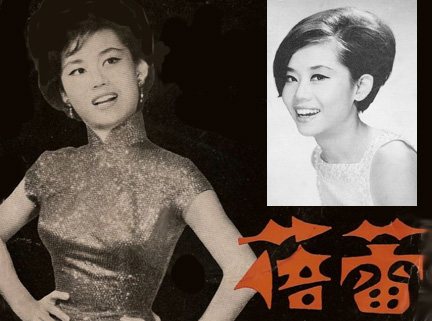
Billie Tam 蓓蕾 was one of the bright stars in the active cabaret scene in Hong Kong in the 1960s. She recorded under the EMI-Pathé (HK) label.

(我一見你就笑 I SMILE WHEN I SEE YOU)
我一見你就笑
你那翩翩風采太美妙
跟你在一起
永遠沒煩惱
我一見你就笑
你那談吐峄止使人迷繞
跟你在一起
永遠樂逍遙
究竟為了什麼
我一見你就笑
因為我已愛上你
出乎你的預料
我一見你就笑
你那翩翩風采太美妙
跟你在一起
永遠沒煩惱

(歡樂今宵 PARTY FEVER)
喂喂 你說什麼我不知道
嘿嘿 不要提起明朝
你給什麼 喂喂 你給什麼我都不要
嘿嘿 只要歡樂今宵
我們要忘卻煩惱 我們要盡情歡笑
來來來 你我在一起快樂逍遙
你不要囉嗦又嘮叨
你不要哭哭又笑笑
有什麼話 留著到大明朝
喂喂 你說什麼我不知道
嘿嘿 不要提起明朝


Chang Siao Ying 张小英

March 10, 2008

chang-siao-ying.jpg

Chang Siao Ying
was a sensation from Singapore whose singing career spanned over two decades. Her first hit Three Dreams (三個夢 San Ke Mung) was written for her. Other early hits were Beloved One (心上 人 Sin Sun Re) and A Small Umbrella (一把小雨傘 Ee Pa Xiao Yu San). She also popularized a lot of songs before the official launch of many original versions (by other singers). It is interesting to note that she was backed by the versatile Travellers in her early days, against a backdrop where Maurice Patton & The Melodians appeared to rule the air of Chinese pops.
travellers.jpg

(望月怕團圓)
青梅和竹馬 我倆結同心
海誓又山盟 願效比翼飛
想不到狂風暴雨 吹散了情海浮萍
杜鵑徹夜啼 像是我知音
望月怕團圓 舊情怕囘憶
生死訣別誰不悲 天荒地老情難移
東風送暖春又來 花兒眼看又上枝
一樣盛景非昨日 情郎永離了人世
杜鵑聲聲悲 窗下我徘徊
望月怕團圓 舊情令心碎
祇很蒼天妒良緣 可憐情郎在九泉
可憐情郎在九泉


Lara Tan 櫻櫻

March 9, 2008

lara-tan.jpglara-tan-3.jpg

Lara Tan was a contemporary of Rita Chao and Sakura Teng. She was backed by another popular Singaporean band, The Trailers.

Lara & The Trailers: Run for your life, Visions, Puppet on a string, Sugar Town, You only live twice, Don’t talk to the life guard, Single girl, Dream girl, Downtown, Dear Mrs. Apple Bee, This is my song, Love potion No. 9, Can’t take my eyes off you, Koo-koo looney, Sunglasses, Call on me.

(SUGAR TOWN)
I got some troubles but they won’t last
I’m gonna lay right down here in the grass
And pretty soon all my troubles will pass
’cause I’m in shoo-shoo-shoo, shoo-shoo-shoo
Shoo-shoo, shoo-shoo, shoo-shoo Sugar Town

I never had a dog that liked me some
Never had a friend or wanted one
So I just lay back and laugh at the sun
’cause I’m in shoo-shoo-shoo, shoo-shoo-shoo
Shoo-shoo, shoo-shoo, shoo-shoo Sugar Town

Yesterday it rained in Tennessee
I heard it also rained in Tallahassee
But not a drop fell on little old me
’cause I was in shoo-shoo-shoo, shoo-shoo-shoo
Shoo-shoo, shoo-shoo, shoo-shoo Sugar Town

If I had a million dollars or ten
I’d give to ya, world, and then
You’d go away and let me spend
My life in shoo-shoo-shoo, shoo-shoo-shoo
Shoo-shoo, shoo-shoo, shoo-shoo Sugar Town
la-la-la-la to end


Bobby Gonzales

March 5, 2008

bobby-gonzales.jpg

He was the original OFW singing OPM (Overseas Filipino Worker and Original Pilipino Music)! It is said that Bobby Gonzales used to sing 25 to 40 songs per show, three shows per day, seven days a week at Clover Theater in Manila, and would then be paid a meager 25 pesos for all that effort. His career finally took off with very successful recordings like Ale Ale, Diyan Ka Na, Dalagang Suplada and Walastik. He was based many years in Tokyo and also played Vegas and Atlantic City, helping to build the reputation of Filipinos as “the entertainers of the world”.

Villar Records: 20 Best Bobby Gonzales
Hahabol-Habol; Inday ng Buhay ko; Ale, Ale; Di Hayop, Di Tao; Nakakaakit; Diyan ka na; Pinoy Rock N’ Roll; Ngalit sa Tatay; Hitsang Hitsang; Nanginginig Pa; Habang Lalong; Wen Manog; Pakombo-Kombo; Bawa’t Oras, Araw-Araw; Maglalakbay; Dinamdam ko; Hindi Bale; Bakit pa ako Nabubuhay; Pampagana; Bisaya Man.

(HAHABOL-HABOL)
O ang babae pag minamahal
May kursunada’y aayaw-ayaw
Pag panay ang dalaw ay nayayamot
Wag mong dalawin, dadabog-dabog
Pag iyong iniwan, hahabul-habol

*Mayroong babae akong nililigawan
Kapag aking pinapanhik sa bahay
Nagatatago at ayaw malapitan
Kung may pag-ibig
Ay di mo malaman
O, ang babae pag minamahal
Maloloka ka ng husto sa buhay

O ang lalaki pag minamahal
Kahit may pag-ibig aayaw-ayaw
Kapag iyon biniro ay nayayamot
Wag mong batiin, dadabog-dabog
Wag mong suyuin ay nagmamaktol
Pag iyong iniwan, hahabol-habol


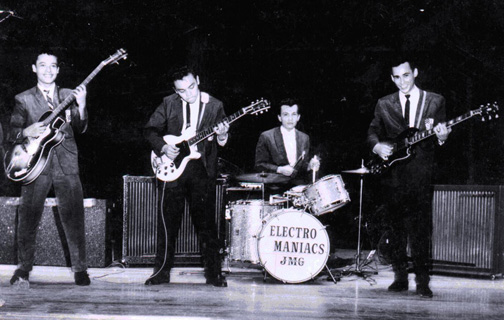
The Electromaniacs

March 3, 2008

Pinoy Rock!
electromaniacs-1.jpg

One of the more prolific instrumental bands from The Philippines. The complete name was Jose Mari Gonzales & The Electromaniacs. Organized and managed by the popular Filipino actor, the band members consisted originally of Ernie Delgado (lead), Gene Generoso (rhythm), Joey Gordon (bass) and Lito Toribio (drums). Gene and Joey soon left and were replaced by Chito Perez (2nd lead) and Emil Caballero (bass). They were playing in the style of The Ventures with a blend of country and blues influences. Their signature tune was Lovers guitar.


Sandra Reemer

March 1, 2008

sandra-reemer-1963.jpgsandra-reemer-1964.jpg

Sandra Reemer
was another “Indo girl”. She was born in Bandung, Indonesia as Barbara Alexandra Reemer (“Xandra”). She loved to sing but it was only after the family repatriated to the Netherlands in 1958 that she started to enter song contests. In April 1962, little Sandra appeared on the famous KRO radio show “De Springplank” and was quickly noticed by bandleader talent-scout Frans Kerkhof. He took her to Philips Records for an audition. In the summer of 1962, the twelve year old Sandra shot to stardom with her Dutch version of “Al di la”. Sandra’s extensive e repertoire include “Malayan” songs, and she recorded some favorites which became very popular hits in the Far East in the 60’s. Today, Sandra is better known as a Dutch singer, having represented the country three times (1974, 1976 & 1979) at the Eurovision Song Contest!