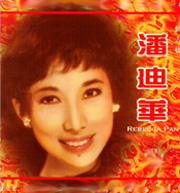
Rebecca Pan 潘迪華 was another singer to rise to prominence during the burgeoning early 1960s cabaret scene in Hong Kong. A mixed of Mandarin and English repertoires were the rave. Rebecca’s bilingual interpretation of Rose, Rose, I love you in 1961 was classic. She followed up in 1965 with another Chinese song that had successfully translated into the West earlier: Second Spring (第二春), composed by Yao Min 姚敏 and sang by Dong Bei Bei 董佩佩 in Shanghai, and also was recorded by Tsai Chin (also known as Irene Chow, 姚莉) as Ding Dong Song in 1959 after it featured in the London stage musical The World of Suzie Wong. The English lyrics were composed by Lionel Bart.
Rebecca Pan has enjoyed a very successful career which now spans five decades. Her Live In The Eagle’s Nest was Hong Kong’s first live album and Pai Niang Niang – The Legend of the White Snake 白孃孃 was also the first original Mandarin musical on the island.
Rebecca Pan’s acclaimed bilingual version of Ding Dong Song and The isle of Pulau Bali are featured here, followed by the original Mandarin version of Second Spring by Dong Bei Bei.
Dong Bei Bei 董佩佩
(Original Chinese lyrics of Second Spring by Dong Bei Bei)
明明是冷冷清清的長夜
為甚麼還有叮叮噹噹的聲音
聽不出是遠還是近
分不出是夢還是真
好像是一串鈴
打亂了我的心
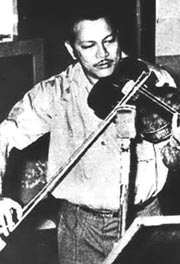
P. Ramlee, actor, movie director, singer and songwriter. He was an icon of Malay entertainment and the “golden son” of Malaysia. Born and grew up in Penang, he sang and played several instruments in various bands. In 1948, he was spotted by Shaw Brothers/Malay Film Productions (popularly known as Ampas Road Studio) while he was singing his own composition Azizah (about a mysterious childhood sweetheart) at Bukit Mertajam. He was invited to join the outfit in Singapore as a playback singer for movies. Shortly, he was able to get his screen break in Chinta. Many other movies followed but it was in Bakti where Ramlee became the first actor to sing his own songs. He became a full-fledged director in Penrarik Beca which contained the song which started it all, Azizah.
P. Ramlee (together with his third wife, the beloved Saloma) revolutionized Malay popular music by drawing on a rich traditional (asli, inang, joget, masri, zapin and keroncong) repertory while incorporating many western musical elements and instruments with a dance hall orchestra. He was posthumously awarded with the Malaysian honorific title Tan Sri .
During his career, he directed and acted in sixty-six films, and had more than 360 songs to his credit. Among his films that received awards are:
1) Best Musical Score for Hang Tuah (3rd Asian Film Festival, Hong Kong (1956)
2) Best Male Actor for Anak-ku Sazali (4th Asian Film Festival, Tokyo (1957)
3) Best Comedy Film for Nujum Pak Belalang (7th Asian Film Festival, Tokyo (1960)
4) Most Versatile Talent for Ibu Mertua Ku (10th Asian Film Festival, Tokyo (1963)
5) Best Comedy Film for Madu Tiga (11th Asian Film Festival, Taipei (1964)
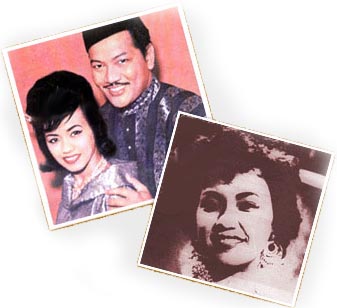
Saloma, the legendary actress/singer, was born in Singapore. She was singing and performing at a young age. When she was of age, she started singing in nightclubs. Soon, her acclaimed pure and melodious voice captivated an audience. She was offered movie contracts where she played lead roles featuring her prominent singing ability. P. Ramlee and Saloma married in 1961. They were adored by their fans. They quickly became the country’s very own “screen couple”!
* National Awards:
1975, Awarded the Ahli Mangku Negara (AMN)
1979, Biduanita Negara (National Celebrity Award)
(BUNYI GITAR)
Oh bunyi gitar
Irama twist
Tidak sabar
Si gadis manis
Dengar lagu rancak gembira
Hatinya rindu tergoda
Ingin dapat teman
Menari suka ria
Sungguh merdu
Lagu ini
Siapa mahu
Boleh menari
Pilih satu teman sendiri
Ataukah si hitam manis
Kalau sudi mari, kita menari twist
Oh gitar berbunyi
Menawan hati sedang berahi
Oh rancaknya irama
Dapat mikat sukma
Gadis dan teruna
Mari cari teman gembira
Gitar solo
Dan melodi
Ikut tempo
Kalau menari
Sila adik, sila cik abang
Marilah kita berdendang
Irama gembira
Hati jadi riang
You are currently browsing the QUESTING bandstand blog archives for August, 2008.
Introduction
NOTE: We are online again. Enjoy!
This blog is intended for showcasing the best of the local singers and bands in the Far East in the 60's. To display Asian characters properly, you may need to update your browser for additional language support. Since the music files are constantly being updated, you also need to refresh and clear the cache in your browser to hear the changes. I encourage listeners to actively support the local artists and recording companies. You can do this by purchasing commercial re-release of the songs if you have enjoyed them here.
Contributing articles and info are welcome and will be properly credited.
1) The Quests, Part 1
2) The Quests, Part 2
3) The Quests in Malay (with Malay artists)
4) The Surfers
5) The Thunderbirds
6) Susan Lim & The Crescendos
7) Naomi Suriya & The Boys
8) Heather & The Diamond Four, The Thunderbirds
9) Shirley Nair & The Silver Strings
10) Rose Iwanaga & The Avengers
11) Suyin (舒雲) & The Quests
12) The Fabulous Echoes
13) Off-beat Cha Cha with Kong Ling ( 江玲) & The Fabulous Echoes
14) The Early Years: Wong Ching Yian (黄清元) & The Melodians. The Stylers
15) Radio show – Retrospective Part 1 (The Decade)
16) Radio show – Retrospective Part 2 (Instrumentally Yours)
17) Radio show – Retrospective Part 3 (A Spiritual Sojourn)
18) Sakura Teng & The Quests.
19) Rita Chao & The Quests, The Surfers
20) Hot August Nights: Rockin’ with “RJ” in Manila
21) QBS Christmas Party (Keep Christ in CHRISTmas!)
22) Gong Xi Fa Cai! (Chinese Year 4714)
23) Happy Valentine’s Day
24) Happy Mother’s Day
25) Reg Guitar 乐雅吉打乐队 (Part 1)
26) Reg Guitar 乐雅吉打乐队 (Part 2)
27) Remembering Jap Chong (of The Quests)
28) The Inimitable Teresa Teng (鄧麗君)
29) The Tielman Brothers (Andy Tielman)
30) Remembering Reggie Verghese (of The Quests)


 Posted by franas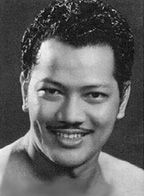
 QUESTING bandstand
You must be logged in to post a comment.