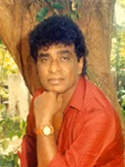
Clarence Wijewardena (1943- 1996) was considered the father of Sri Lankan pop music. He pioneered the use of the electric guitar and formed his first band Moonstones with Annesley Malewana as the lead singer. Wijewardena was the exceptional composer and music director for the band. They released their debut album ‘Mango Nanda’ under Philips label in 1968. Wijewardena’s musical prowess was recognized when the title song Mango Nanda was selected as the best Sinhala song by the Hit Parade program on Radio Ceylon. During this period, Wijewardena also took turn to sing lead like in the hit song Dileepa Podi Puthu. In 1981, Wijewardena parted with the Moonstones to form The Golden Chimes with ex-Moonstones bassist Chanaka Perera and Lankika Perera. The talented lead guitarist, Dixon Gunaratne, was added later. Their first song ‘Kimada Naawe’ became an instant hit. In 1972, Wijewardane regrouped with Annesley Malewana and with Dixon Gunaratn, left to form The Super Golden Chimes. As a band, they dominated the Sri Lankan pop scene, and ruled both the Sinhala and English Services of Radio Ceylon. They disbanded in 1979. Wijewardena continued successfully as a solo act until his untimely death. The surviving members of The Super Golden Chimes came together for a reunion concert in 2004. The extended live version of Sathuta Senasuma (Happy Feelings) from the concert is presented here.
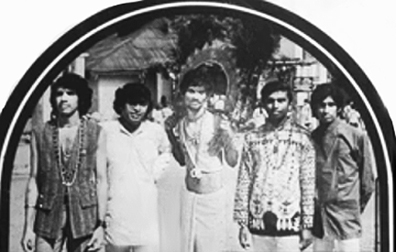
The Super Golden Chimes


 Posted by franas

 QUESTING bandstand
You must be logged in to post a comment.