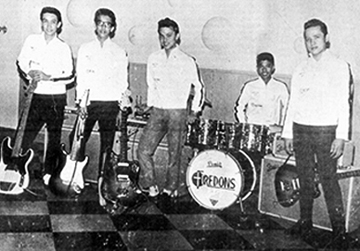
The Firedons were a hot “teenage” band which was featured regularly on the first teenage music dance program in Philippine television. the Dance-O-Rama in the early 60’s. The band recorded some great instrumentals like El Tomado, Mi Corazon and Shell Beat. With Ronnie, they recorded songs like Teenage Mash, Serenade in the Night, On the Beach and Can’t buy me love.
Ronnie Villar & The Firedons: Ronnie Villar (vocals), Willy Villar (lead), David Llorente (rhythm), Cesar Llorente (bass), and Waldy Cruz (drums) with Manny “Boy” Tagalog (drums, 1964).
草原之夜 Night on the Prairies (“Caoyuanzhiye”) is a folk love song from the Mongolian grasslands. The original singer was 朱崇懋 Zhu Chongmao (1922 – 2000) who sang it in the 1959 documentary Greenfields 〈绿色的原野〉[although many think it was 孟贵彬 Meng Gui-Bin]. It is said that the producer/lyricist (Zhang Jiayi 张加毅) and composer (Tian Ge 田歌), while shooting a party propaganda film in Yili region of Xinjiang in Huocheng, were inspired to write the song together spontaneously after watching the simple happy lifestyle of the horse people of the grasslands. Zhu Chongmao, whose singing was described as “implicit inner, delicate affectionate, sweet tone, clear articulation,” gave an unforgettable rendition of Caoyuanzhiye. He was a soloist as well as choral conductor with the Shanghai People’s Broadcasting Station and China Broadcasting Art Troupe before he emigrated to the USA in 1969. He continued his work in choral arts until his passing in New York.
草原之夜 cǎo yuán zhī yè (NIGHT ON THE PRAIRIES)
美丽的夜色多沉静 měi lì de yè sè duō me chén jìng
(Beautiful is the evening scene in its quietness!)
草原上只留下我的琴声 cǎo yuán shàng zhī liú xià wǒ de qín shēng
(On this vast prairie land, there remains, only the sound of my music!)
想给远方的姑娘写封信 xiǎng gěi yuǎn fāng de gū niáng xiě fēng xìn
(I would write a letter to my lady far, far away)
可惜没有邮递员来传情 kě xī méi yǒu yóu dì yuán lái chuán qíng
(But, unfortunately, there is no postman, to convey my love!)
等到那千里冰雪消融 děng dào qiān lǐ bīng xuě xiāo róng
(I’ll wait for these miles of snow and ice to melt away)
等到草原上送来春风 děng dào cǎo yuán shàng sòng lái chūn fēng
(For the spring to bring a warm breeze to this land)
可可达拉改变了模样 kě kè dá lā gǎi biàn le mó yàng
(For this whole prairie land to put on a new landscape)
姑娘就会来伴我的琴声 gū niáng jiù huì lái bàn wǒ de qín shēng
(My fair lady would then be here to sing to my music!)
美丽的夜色多沉静 měi lì de yè sè duō me chén jìng
草原上只留下我的琴声 cǎo yuán shàng zhī liú xià wǒ de qín shēng
想给远方的姑娘写封信 xiǎng gěi yuǎn fāng de gū niáng xiě fēng xìn
可惜没有邮递员来传情 kě xī méi yǒu yóu dì yuán lái chuán qíng
来 来 来 来~~~ lái lái lái lái ~~~
(Come, come, come, come ~~~)
可惜没有邮递员来传情 kě xī méi yǒu yóu dì yuán lái chuán qíng
(But, unfortunately, there is no postman, to convey my love!)
姑娘就会来伴我的琴声 gū niáng jiù huì lái bàn wǒ de qín shēng
(My fair lady would come here to sing to my musical accompaniment!)
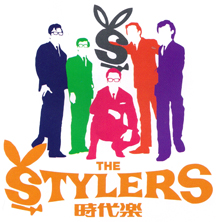
The Stylers’ presence and influence of Chinese beat music was of epic proportion. They started out as The Angels (later, as The Rhythm Strickers) and recorded a Mandarin EP “Maggie” under Miracle Records in 1962. In 1966, they teamed up with the popular vocalist Ronnie See and gigged regularly at the popular Celestial Room Tea Dance (Singapore). They recorded an EP cover of English songs with Squirrel Records with some success. By the time Ronnie left in 1969, they had landed a major contract with Polar Bear Records to back Chinese singers. They had inherited a “dynasty” from The Melodians after they disbanded due to the fatal electrocution accident of Maurice Patton. The number of record releases by The Stylers was staggering. Besides backing the ever expanding pool of multi-racial singers who eagerly sought after them, they also released a voluminous grab bag of “non-stop instrumental” (off-beat cha-cha, a-go-go, fox-trot, etc.) dancing music.
The Stylers: John Teo (lead), Rahn Lee (rhythm), Douglas Tan (bass) and Elying Wong (drums). Other members over the years included: Frankie (bass), Jeffrey Ong (keyboard), Idros (drums), Osman (drums), Ronnie See (vocal) and Robert Song (vocal, percussions).
(LET’S DANCE)
Hey baby, won’t you take a chance.
Say that you’ll let me have this dance.
Well let’s dance, let’s dance.
We’ll do the twist, the stomp, the mashed potatoes too,
Any old dance that you wanna do.
Well let’s dance, let’s dance.
Hey baby if you’re all alone.
Baby, you’ll let me walk you home
Let’s dance …
Hey baby yeah you thrill me so.
Hold me tight, don’t you let me go.
Let’s dance …
Hey baby yeah things are swing right
Yes I know that this is the night.
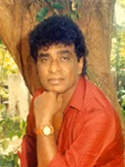
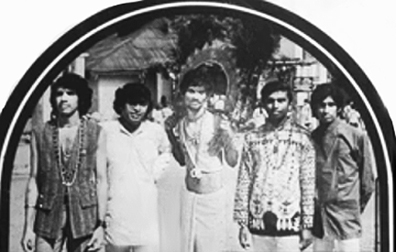
Clarence Wijewardena (1943- 1996) was considered the father of Sri Lankan pop music. He pioneered the use of the electric guitar and formed his first band Moonstones with Annesley Malewana as the lead singer. Wijewardena was the exceptional composer and music director for the band. They released their debut album ‘Mango Nanda’ under Philips label in 1968. Wijewardena’s musical prowess was recognized when the title song Mango Nanda was selected as the best Sinhala song by the Hit Parade program on Radio Ceylon. During this period, Wijewardena also took turn to sing lead like in the hit song Dileepa Podi Puthu. In 1981, Wijewardena parted with the Moonstones to form The Golden Chimes with ex-Moonstones bassist Chanaka Perera and Lankika Perera. The talented lead guitarist, Dixon Gunaratne, was added later. Their first song ‘Kimada Naawe’ became an instant hit. In 1972, Wijewardane regrouped with Annesley Malewana and with Dixon Gunaratn, left to form The Super Golden Chimes. As a band, they dominated the Sri Lankan pop scene, and ruled both the Sinhala and English Services of Radio Ceylon. They disbanded in 1979. Wijewardena continued successfully as a solo act until his untimely death. The surviving members of The Super Golden Chimes came together for a reunion concert in 2004. The extended live version of Sathuta Senasuma (Happy Feelings) from the concert is presented here.
The bourgeois Shanghai in 1930s-1940s was swinging. The innovation of the gramophone and the Bai Dai 百代 record company served to secure this period as the golden age of Mandarin popular music and a time of brilliant soundtracks for the young Chinese film industry. The era came to an abrupt end with the Second Sino-Japanese War and ensuing suppression of pop music by the Chinese Communist Party. One singer to survive was Liang Ping who sang the spirited The Youth of Mine (Shao nian re who) which is always revived and played during Chinese New Year.
(THE YOUTH IS MINE 少年的我)
春天的花是多麼的香
秋天的月是多麼的亮
少年的我是多麼的快樂
美麗的她不知怎麼樣
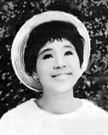
Growing up listening to pops and jazz in places like Tachikawa frequented by the Occupation troops, ” Miki” (or “Mici”) sang her debut single 子供じゃないの (a cover of Helen’s Shapiro’s Don’t treat me like a child) in 1961 at age 14. By the following year, she was tapped to sing ヴァケイション (Connie Francis’ hit: Vacation) on the spectacular NHK’s (Nippon Hōsō Kyōkai, or Japan Broadcasting Corporation) new year’s eve celebration Kōhaku Uta Gassen and was invited back for the next four years in succession, and again in 1969, 1970 and 1971. She sang the theme song, “Leo no Uta,” for the popular Japanimation TV series Kimba the White Lion.
Rock ‘n’ roll music was sweeping the world and Japan was not spared. The Peanuts was a duo comprised of two identical twin sisters, Emi and Yumi Ito. In those early days of J-pop, they sang many Japanese covers of popular hit songs from the West. They also recorded successful original compositions like “Jyonetsu no Hana (Passion Flower)”, “Koi no Bakansu (Vacation of Love)”. “Koi no Fuga (Love Fugue)” and “Sayonara wa Totsuzen Ni (Goodbye is Sudden)”. The sisters were also widely known as the Mothra Twins for featuring in the three Mothra movies where they appeared as shobijin (pixies). They retired from performance in 1975.
悲しき16才 (HEARTACHES AT SWEET SIXTEEN)
ひとりぼっちお部屋で
夢見るわあの人
なぜか悲しいこの頃
私は16
今日もそっとオシャレ
呼んでみても知らんフリ
それが悲しいこの頃
そんな私なの
どうすればいいんでしょう?
本当に 悲しいわ
こんな気持ち誰にも
判るはずがないのよ
パパやママも私を
ただ笑うだけ
こんな気持ち誰にも
判るはずがないのよ
パパやママも私を
ただ笑うだけ
ただ笑うだけ
HEARTACHES AT SWEET SIXTEEN (by Kathy Linden)
I’m sitting all alone and feeling blue
I’m wondering if he found somebody new
Whoever thought that I’d be going through
Heartaches at sweet sixteen
He wouldn’t speak to me at school today
He made real sure to look the other way
What did I do to him, what did I say
Oh these heartaches at sweet sixteen
Can I make him care at all
I’ll die if he doesn’t call
No matter how my parents tease and laugh
I’ll wear his ring and kiss his photograph
They just don’t understand or know the half of
Heartaches at sweet sixteen
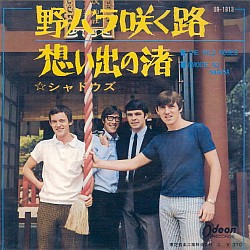
Made in Japan: There was Eleki and then there was Group Sounds (GS), a genre of Japanese rock music inspired by The Beatles and a fusion of Japanese kayōkyoku music and rock music. The Wild Ones led by Kase Kunihiko was one of the top GS bands. Among some very memorable hits by the band was a major hit in Japan in 1966: 思い出の渚 Omoide No Nagasi (“The beach of memories”). The Shadows would later recorded it as an instrumental hit.
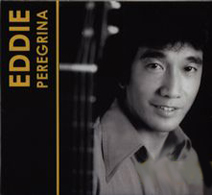
Eddie Peregrina was another OPM (Original Pilipino Music) legend. While he sang with The Blinkers in Japan, he also became the first jukebox king in his homeland where Filipinos thronged around the coin-operated machines to drop 20 centavos to listen to their favorite singing idol. With the band, Eddie Peregrina gave us memorable hits like Blue Eyes and Together Again. During his prime, Eddie Pergrina was also doing TV (like the popular The Eddie-Nora Show) and acted in movies with leading ladies (like Vilma Santos, Espie Fabon, Nora Aunor). Eddie died from a car accident at the age of 32 in 1977. He was survived by his wife, Lyn, and two daughters, Edlyn and Michelle. He left a legacy of evergreen songs like Alaala ay ikaw and Nabubuhay ako dahil sa’yo.
The Blinkers were: “Eddie” Peregrina (vocals, lead guitar, and organ), Salvador “Buddy” Yap (bass guitar), Edgardo “Bee” Morelos (rhythm guitar), Max “Boy” Alcaide (drums), and Edgard Oscar Asusr (keyboard, 1967 – 74).
(ALAALA AY IKAW)
Malilimutan ko pa ba aking mahal
Ang maligayang araw nating nagdaan
Habang ako’y nag-iisang nalulumbay
Ang alaala ay ikaw
Ang aking suyuang walang kasing tamis
Sa gunita pala ay ubod ng pait
Ang nagtampong pag-ibig mong di ko batid
Kung minsan pang magbabalik
Kaya wala nang nalabi sa dibdib ko
Kundi ang alaala ng pag-ibig mo
Asahanmong jhindika na mawawala
Dito sa aking gunita
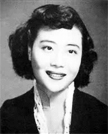
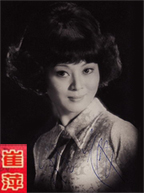
Tsui Ping 崔萍 was born in Harbin, China and grew up in Hong Kong. At a young age, she was always fascinated by great Shanghaise singers like 張露 and 白光. While singing at nightclubs, she was encouraged by songwriter Wong Fuk Lin 王福 齡 who later wrote two songs for her which would become major hits:”Treasure Tonight” 今宵多珍重 and “Nang Ping Evening Bells” 南屏晚鐘. She is a much respected singer with many of her cover of previous hits being considered better and were more popular than the originals like 重逢 and 兩相依. She retired from professional singing in 1971.
This blog is intended for showcasing the best of the local singers and bands in the Far East in the 60's. To display Asian characters properly, you may need to update your browser for additional language support. Since the music files are constantly being updated, you also need to refresh and clear the cache in your browser to hear the changes. I encourage listeners to actively support the local artists and recording companies. You can do this by purchasing commercial re-release of the songs if you have enjoyed them here.
Contributing articles and info are welcome and will be properly credited.
1) The Quests, Part 1
2) The Quests, Part 2
3) The Quests in Malay (with Malay artists)
4) The Surfers
5) The Thunderbirds
6) Susan Lim & The Crescendos
7) Naomi Suriya & The Boys
8) Heather & The Diamond Four, The Thunderbirds
9) Shirley Nair & The Silver Strings
10) Rose Iwanaga & The Avengers
11) Suyin (舒雲) & The Quests
12) The Fabulous Echoes
13) Off-beat Cha Cha with Kong Ling ( 江玲) & The Fabulous Echoes
14) The Early Years: Wong Ching Yian (黄清元) & The Melodians. The Stylers
15) Radio show – Retrospective Part 1 (The Decade)
16) Radio show – Retrospective Part 2 (Instrumentally Yours)
17) Radio show – Retrospective Part 3 (A Spiritual Sojourn)
18) Sakura Teng & The Quests.
19) Rita Chao & The Quests, The Surfers
20) Hot August Nights: Rockin’ with “RJ” in Manila
21) QBS Christmas Party (Keep Christ in CHRISTmas!)
22) Gong Xi Fa Cai! (Chinese Year 4714)
23) Happy Valentine’s Day
24) Happy Mother’s Day
25) Reg Guitar 乐雅吉打乐队 (Part 1)
26) Reg Guitar 乐雅吉打乐队 (Part 2)
27) Remembering Jap Chong (of The Quests)
28) The Inimitable Teresa Teng (鄧麗君)
29) The Tielman Brothers (Andy Tielman)
30) Remembering Reggie Verghese (of The Quests)


 Posted by franas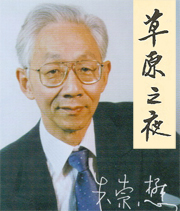





 QUESTING bandstand
You must be logged in to post a comment.